
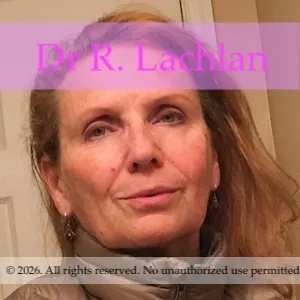
Dr R. Lachlan has four decades of experience in helping clients with their wellness needs, as well as teaching energy-based therapeutic and movement arts to intending practitioners and trainers. She is a Board Certified Polarity Practitioner and Registered Polarity Educator (APTA-USA) who has practiced and taught Polarity Therapy in the USA and Australia (she holds dual nationality of Australia and the USA). She has been teaching Tai Chi and Qi Gong since the 1980s and developed a Polarity Therapy and Tai Chi based energy-yoga called Aumgenic™ Therapeutic Movement in which she has provided classes for over 20 years. Her Yoga method was presented in a TV series "Serenity at Sunrise" in Virginia USA.
Her clients and students have included CEOs, medical doctors, senior government employees, chiropractors, teachers, consultants, massage therapists, home makers, business owners. No stranger to accidents and health challenges of her own, she brings compassion and no-nonsense directness to her therapeutic work and her teaching. She herself has "walked the walk" of healing and genuinely enjoys passing that on to her clients and students.
- Polarity TherapyPolarity Therapy is a holistic healing approach that seeks to balance the body's energy flow to promote health and well-being. It combines hands-on bodywork, energy balancing techniques, breathwork, and nutritional counselling to facilitate relaxation, release tension, and harmonize the body's energy centres (chakras). Through gentle touch and manipulation of energy, practitioners aim to identify and address blockages or imbalances in the client's energy field, promoting a state of balance and vitality. Polarity Therapy recognizes the interconnectedness of the body, mind, and spirit, emphasizing the importance of addressing all aspects of an individual's being to support overall health and vitality.
- Craniosacral TherapyCraniosacral Therapy (CST) was developed by John E Upledger, influenced by Dr. William Sutherland's research. It involves gentle hands-on evaluation and light touch on the craniosacral system, which includes the membranes and cerebrospinal fluid surrounding the brain and spinal cord. CST releases restrictions in this system, benefiting the central nervous, digestive, musculoskeletal, respiratory, and circulatory systems. It has shown to help with somatic conditions like depression and anxiety. CST has two types: Biomechanical and Biodynamic, both falling under the general heading of Craniosacral Therapy.
- YogaA physical, mental and spiritual practice, Yoga is a Vedic tradition of India and the Himalayas dating more than 2,500 years. Classes are generally 1 - 1 ½ hrs in duration and incorporate physical postures and movement (asanas), breath exercises (pranayama), relaxation and concentration, philosophy, and meditation. Yoga benefits the physical and mental body by enhancing flexibility, improving muscle strength and tone, increasing body awareness, and promoting relaxation and calm.
- Tai ChiTai Chi is a Chinese martial art that combines slow, flowing movements, controlled breathing, and a meditative state of mind. Known as "meditation in motion," Tai Chi improves strength, flexibility, balance, and cardiovascular fitness. The gentle, circular movements help relax muscles and joints while promoting deep, intentional breathing. Each pose is named after animals or martial arts techniques, and participants focus on bodily sensations throughout the practice. Tai Chi is highly adaptable and can benefit people of all ages and fitness levels. Regular practice can lower blood pressure, improve aerobic conditioning, and reduce the risk of falls.
- Qi GongQigong (pronounced chi-gong) was developed thousands of years ago as a form of Chinese Medicine. Qi translates to “subtle breath” and gong translates to “skill cultivated through steady practice.” It combines gentle movement, deep breathing, and mind regulation to optimise energy in the mind, body and spirit. There are hundreds of forms of qigong exercises, including Tai Chi, Baduanjin, Liuzijue, Hu Yue Xian, Yijin King, and Medical Qigong, and they all have the primary aim of reducing stress and building stamina, increasing vitality, and enhancing immune function.
- Rotai Pain ReliefRotai Pain Relief is a specializsd technique designed to provide relief from chronic pain and musculoskeletal imbalances. It incorporates a combination of gentle movements, stretches, and manual manipulations to address tension, restrictions, and misalignments in the body. The practitioner utilises their hands and body to assess and correct imbalances in the musculoskeletal system, targeting specific areas of pain or discomfort. Rotai Pain Relief aims to restore proper alignment, improve mobility, release tension, and alleviate pain. It is often used as a complementary therapy alongside other modalities to support the body's natural healing process and promote overall wellbeing.